Reconnecting With Your Body: Can Yoga Aid Spinal Cord Injury Recovery?
January 2, 2026
Avery Homer
Edited by:
Ceren Yarar-Fisher
Disconnection
Spinal cord injury is life-altering. Not just because of the paralysis or loss of sensation, but because they sever a deeply ingrained, almost invisible link between your brain and body. When the spinal cord is injured, the body’s communication system takes a serious hit. Signals that typically pass back and forth—from sensory inputs going up, to motor commands going down—can be blocked or completely lost. This leads to more than physical dysfunction; it creates a jarring sense of disconnection.
And the ripple effects go far beyond the physical aspects. The sudden loss of autonomy, everyday function, and independence often spirals into deeper challenges like depression, anxiety, low motivation, social withdrawal, and even identity crises.
How Would Yoga Look for Individuals with SCI?
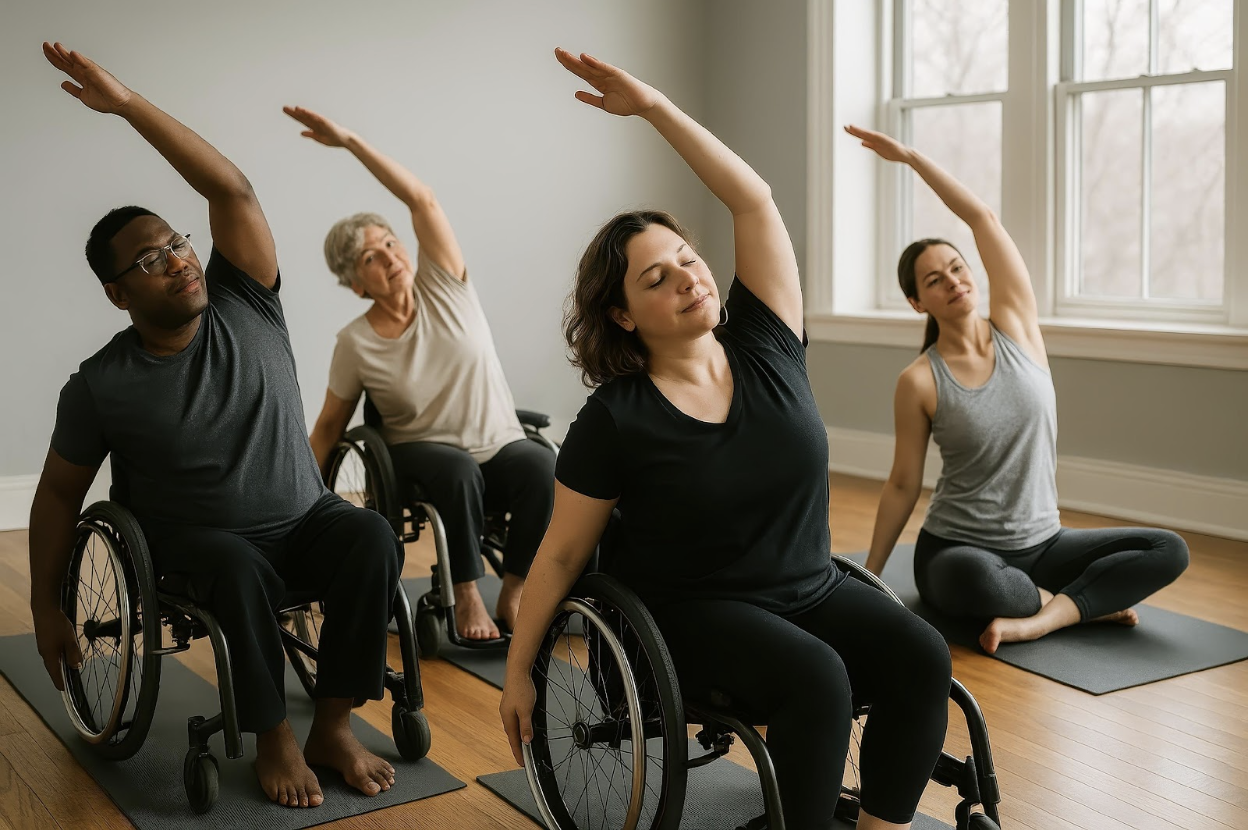
It’s not the yoga you see on Instagram—there’s no headstands or downward dogs here. Instead, it’s adaptive yoga—a gentler, safer, and more flexible approach designed for people with limited or no mobility.
In one pilot study, instructors modified traditional yoga poses so they could be practiced while seated, using supportive props like chairs, bolsters, and straps. The sequences were carefully designed to match each participant’s specific functional capacity.
For example:
- Paraplegic individuals (lower-body paralysis) might engage in upper-body stretches and postural work.
- Tetraplegic individuals (paralysis in all four limbs) may need additional assistance, with more focus on breathwork and meditation.
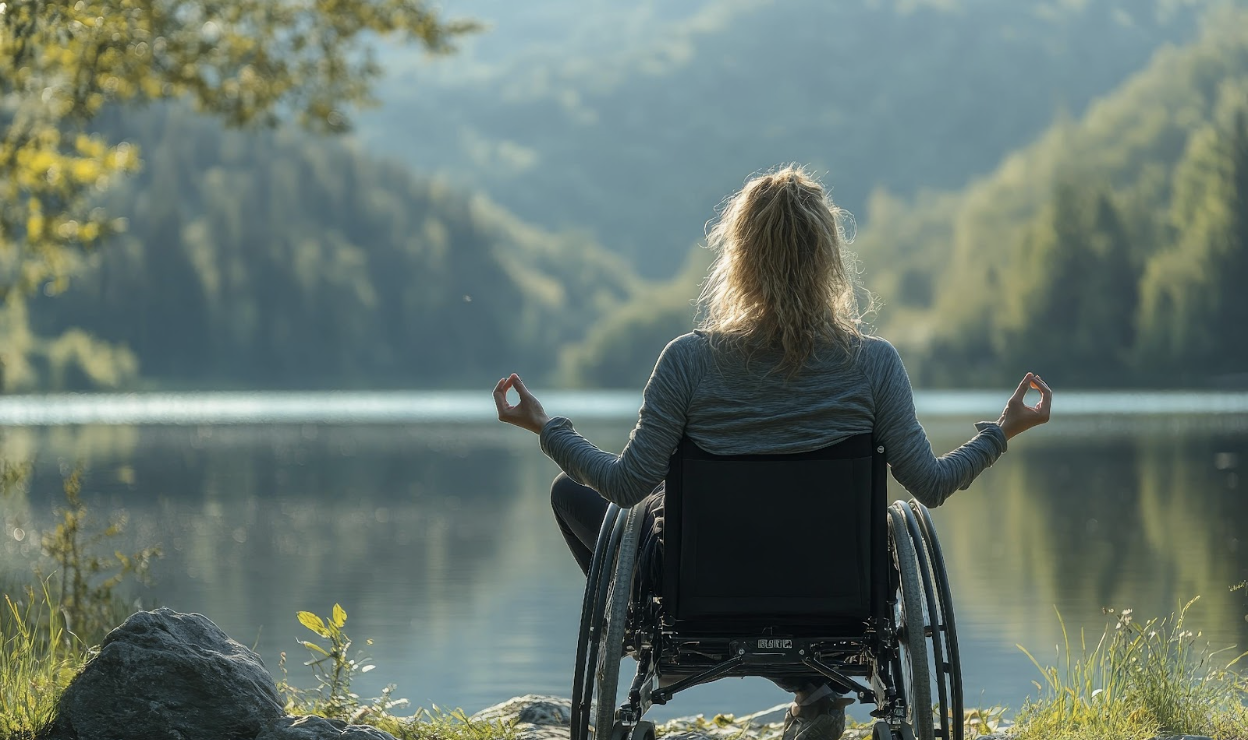
- Even those with no voluntary movement can still benefit from guided breathing, visualizations, and mindfulness exercises.
Of course, precautions are key. People with SCI are at risk of autonomic dysreflexia, spasticity, or pressure sores, so sessions should always be guided by someone trained in both yoga and SCI-specific medical awareness.
What the Research Actually Says About Yoga and SCI
Now, let’s talk science—not speculation.
A growing body of research supports yoga as a promising mind–body therapy for people with spinal cord injury—especially in the psychological and emotional domain.
Study #1: Seated Yoga and Mental Health
A 6-week seated yoga program, involving two sessions per week, showed clear results. Compared to the control group, participants in the yoga group experienced:
- Reduced depressive symptoms
- Increased self-compassion
- Improvements in mindfulness, particularly in “non-reactivity” and “observing” abilities
In other words, yoga helped participants stay calm, notice their thoughts without judgment, and be kinder to themselves.
Study #2: Yoga and Quality of Life
Another trial assessed changes using standardized health metrics:
- Hospital Anxiety and Depression Scale (HADS)
- Perceived Stress Scale (PSS)
- Numeric Pain Rating (NPR)
- Spinal Cord Independence Measure (SCIM)
- WHO Quality of Life scale
The results?
- Decreased scores in anxiety, depression, stress, and pain
- Improved functional independence and quality of life
These findings suggest that yoga doesn’t just help you cope—it can actively improve your emotional state and help rebuild your sense of agency.

What Yoga Can’t Do: Managing Expectations
Let’s be clear: yoga is not a cure for paralysis.
None of the studies showed improvement in:
- Muscle strength
- Walking ability
- Sensory function
So, yoga shouldn’t be seen as a path to physical recovery—but rather a way to rebuild the inner connection, emotionally and mentally.
Still, this isn’t a small thing. For many individuals with SCI, regaining emotional balance, body awareness, and a sense of control can have an enormous impact on overall well-being.
As the saying goes, “Healing doesn’t always mean being cured. It can mean becoming whole again.”
Literature
- Brett Q. Yoga for Paralysis. YogaAnytime.
- Budd MA, Gater DR, Channell I. Psychosocial Consequences of Spinal Cord Injury: A Narrative Review. Journal of Personalized Medicine. 2022; 12(7): 1178. doi: https://doi.org/10.3390/jpm12071178
- Calderone A, Cardile D, De Luca R, et al. Cognitive, behavioral and psychiatric symptoms in patients with spinal cord injury: a scoping review. Frontiers in Psychiatry. 19 March 2024; 15. doi: https://doi.org/10.3389/fpsyt.2024.1369714
- Chalageri E, Vishwakarma G, Ranjan RL, Govindaraj R, Chhabra HS. Effect of Raja yoga Meditation on Psychological and Functional Outcomes in Spinal Cord Injury Patients. International Journal of Yoga. 2021; 14(1): 36-42. doi: 10.4103/ijoy.IJOY_68_20
- Curtis K, Hitzig SL, Bechsgaard G, et al. Evaluation of a specialized yoga program for persons with a spinal cord injury: a pilot randomized controlled trial. Journal of Pain Research. doi: 10.2147/JPR.S130530
- Leemhuis E, De Gennaro L, Pazzaglia M. Disconnected Body Representation: Neuroplasticity Following Spinal Cord Injury. Journal of Clinical Medicine. 2019; 8(12): 2144. doi: https://doi.org/10.3390/jcm8122144
- Leemhuis E, Giuffrida V, De Martino ML, et al. Rethinking the Body in the Brain after Spinal Cord Injury. Journal of Clinical Medicine. 2022; 11(2): 388. doi: https://doi.org/10.3390/jcm11020388
- Lenggenhager B, Pazzaglia M, Scivoletto G, Molinari M, Aglioti SM. The Sense of the Body in Individuals with Spinal Cord Injury. PLOS One. 2012. doi: https://doi.org/10.1371/journal.pone.0050757