Better Blood Sugar, Steadier Blood Pressure? Exploring Low-Glycemic Eating After Spinal Cord Injury
From Our Research to Your Kitchen: Simple Food Choices to Support Your Health After SCI
Jia Li, PhD
Edited by:
Ceren Yarar-Fisher, PT, PhD
Have you ever felt dizzy, lightheaded, or unusually tired after eating a meal? Have you wondered whether the foods you eat could affect not only your blood sugar but also your blood pressure?
For people living with spinal cord injury (SCI), the connection between food, blood sugar, and blood pressure may be more important than you think.
At a Shirley Ryan AbilityLab webinar, Dr. Yarar-Fisher shared findings from our research exploring the potential benefits of a low-glycemic index (GI) diet for blood pressure regulation after SCI. One question we received from attendees was particularly practical: What does a low-GI diet actually look like in everyday life?
Inspired by these conversations, we put together this guide to share what we learned from our research and how you can incorporate lower-GI foods into your daily routine.
Why Does Blood Pressure Drop After Eating?
When we think about the relationship between diet and blood pressure, we often think about eating too much salt or having high blood pressure. But for many people with SCI, the opposite can also be a problem.
After eating, more blood flows toward the digestive system to help the body process food and absorb nutrients. Normally, the nervous system helps maintain blood pressure during this process. After SCI, however, communication between the brain and the systems that regulate blood pressure may be disrupted.
As a result, blood pressure can drop after eating. This condition is known as postprandial hypotension, and previous research suggests that it affects approximately half of people living with SCI.
Some people may experience dizziness, weakness, or fatigue after meals, while others may not notice any symptoms at all. But could changing the types of food we eat help?
What Is a Low-Glycemic Index Diet?
Not all carbohydrates affect your blood sugar in the same way. The glycemic index, or GI, is a ranking system that helps us understand how different carbohydrate-containing foods affect blood sugar.
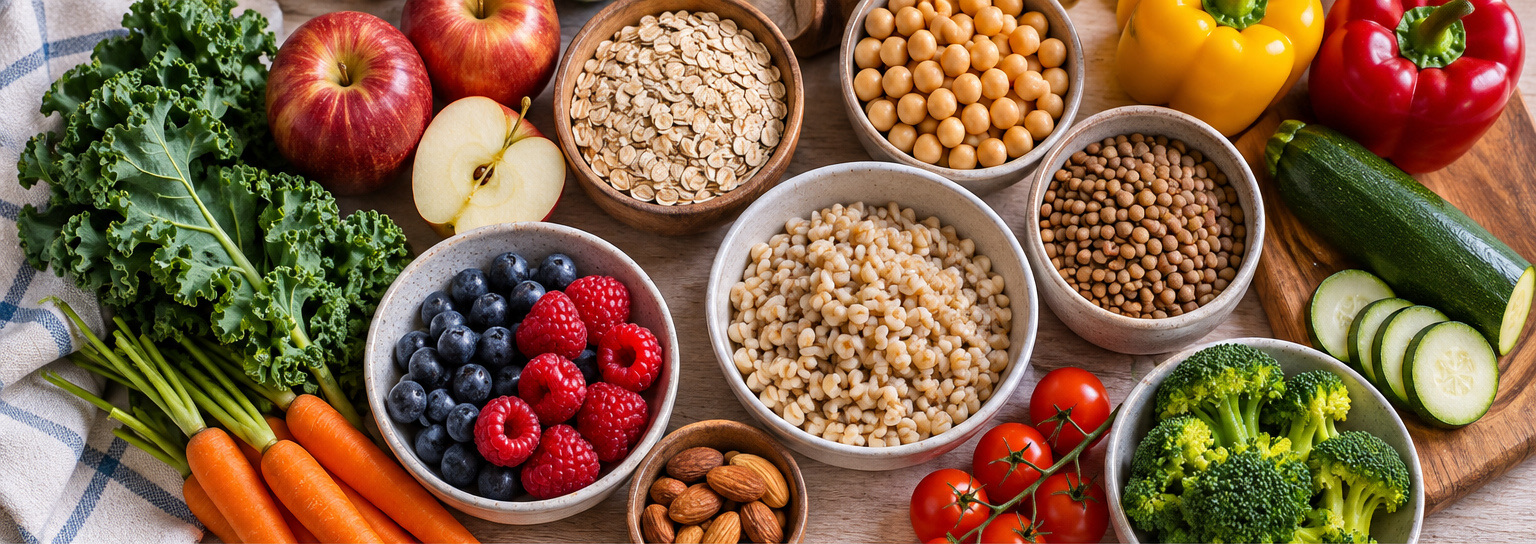
- Low-GI foods generally cause a smaller rise in blood sugar. Examples include lentils, chickpeas, apples, and old-fashioned oatmeal.
- Medium-GI foods fall somewhere in between. Examples include brown rice and boiled sweet potatoes.
- High-GI foods tend to cause a larger rise in blood sugar. Examples include white bread, cornflakes, and instant mashed potatoes.
After SCI, changes in muscle mass and physical activity can make it more difficult for the body to manage blood sugar. Choosing lower-GI foods may be one way to support blood sugar management. Interestingly, these food choices might also play a role in blood pressure regulation.
What Did Our Research Team Discover?
In a study published in Topics in Spinal Cord Injury Rehabilitation in 20251, our research team at The Ohio State University investigated whether eating lower-GI meals could help reduce blood pressure drops after eating in people living with SCI.
Eleven adults with SCI participated in our study. Each participant tried both a low-GI and a high-GI diet on separate occasions. The meals were designed to provide similar amounts of calories, carbohydrates, fats, and protein, allowing us to explore whether the types of carbohydrates could make a difference.
We monitored participants’ blood pressure and blood sugar both in our research laboratory and during their everyday lives at home.
Here Is What We Found
- After eating a low-GI breakfast in our laboratory, participants experienced an average maximum drop in systolic blood pressure (the top number) of 14 mmHg, compared with 24 mmHg after a high-GI breakfast.
- Blood sugar and insulin levels were lower 30 minutes after eating the low-GI breakfast.
- At home, participants experienced smaller blood sugar peaks after low-GI lunches and dinners.
What Do These Findings Mean?
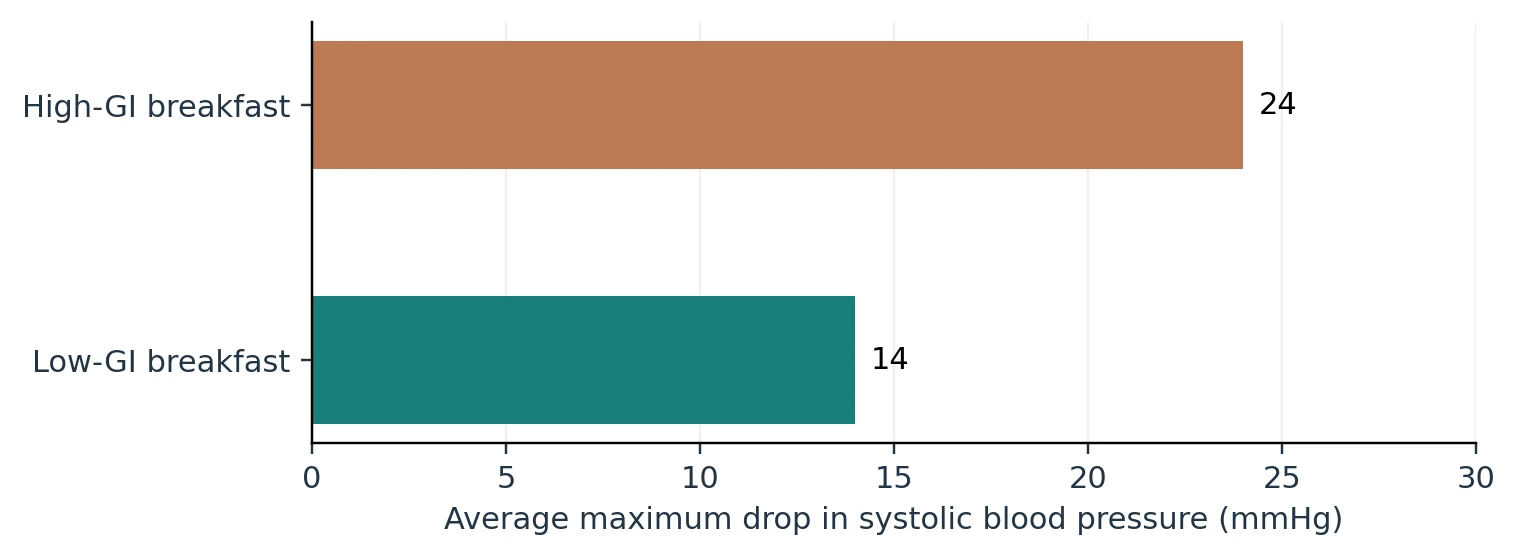
Figure 1. Laboratory breakfast (11 participants). The difference was not statistically conclusive. Error bars and individual responses are not shown. Source: Farrow et al., 2025.
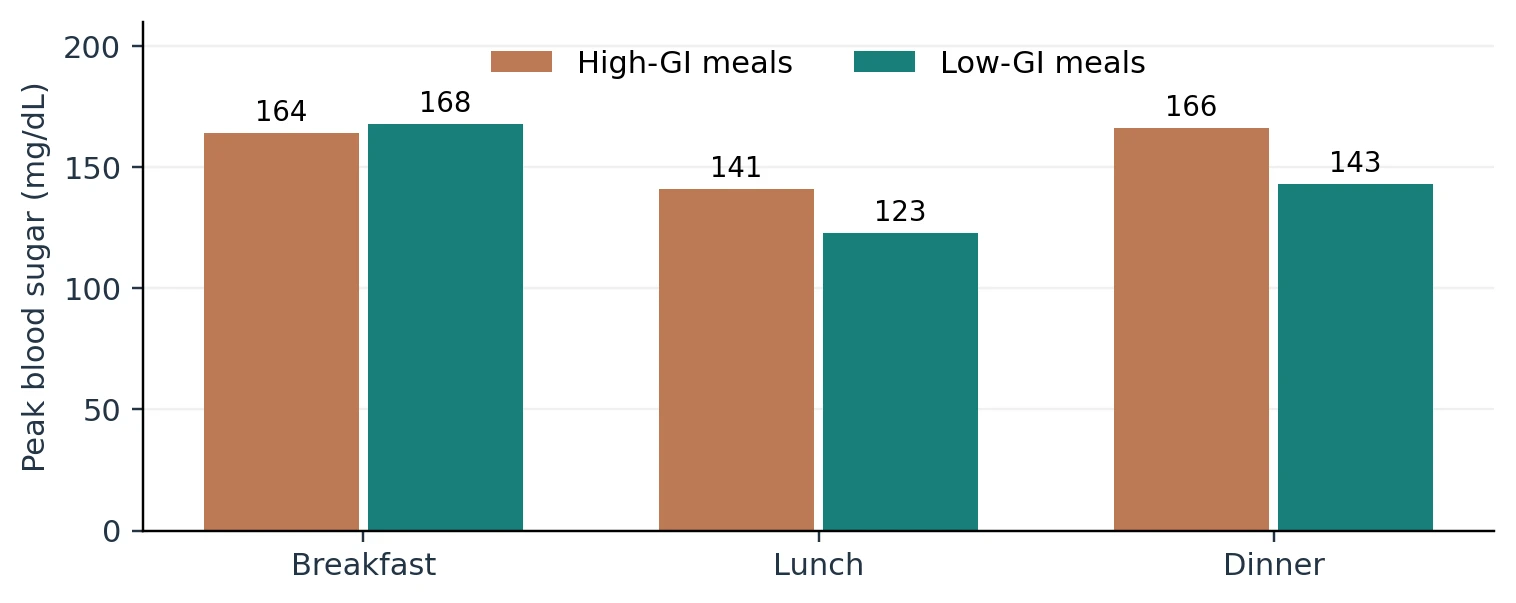
Figure 2. At-home measurements (9 participants). Peak blood sugar was significantly lower at lunch and dinner, but not breakfast. Error bars are not shown. Source: Farrow et al., 2025, Table 4.
Although the laboratory blood pressure findings were encouraging, the difference was not statistically conclusive, and we did not observe a clear blood pressure benefit at home. Our study was small and short-term, so more research is needed. These early findings suggest that lower-GI meals may help manage blood sugar peaks and might reduce blood pressure drops after eating.
Interested in learning more? Read our published study here.
From Research to Reality: What Does Low-GI Eating Look Like?
Eating a lower-GI diet doesn’t mean giving up your favorite foods, cutting out carbohydrates, or buying expensive specialty products. In fact, many foods you may already have in your kitchen can be part of a lower-GI eating pattern.
Some of the foods we incorporated into the low-GI meals in our research study included:
- Bran flakes and almonds
- Apples and peaches
- Lentils and chickpeas
- Barley and beans
- Hummus and avocado
- Peanut butter
However, we also recognize that preparing meals after SCI can come with unique challenges. Limited hand function, fatigue, the need for assistance, food costs, and bowel management can all influence what works for you.
Healthy eating should fit into your life—not make your life more complicated.
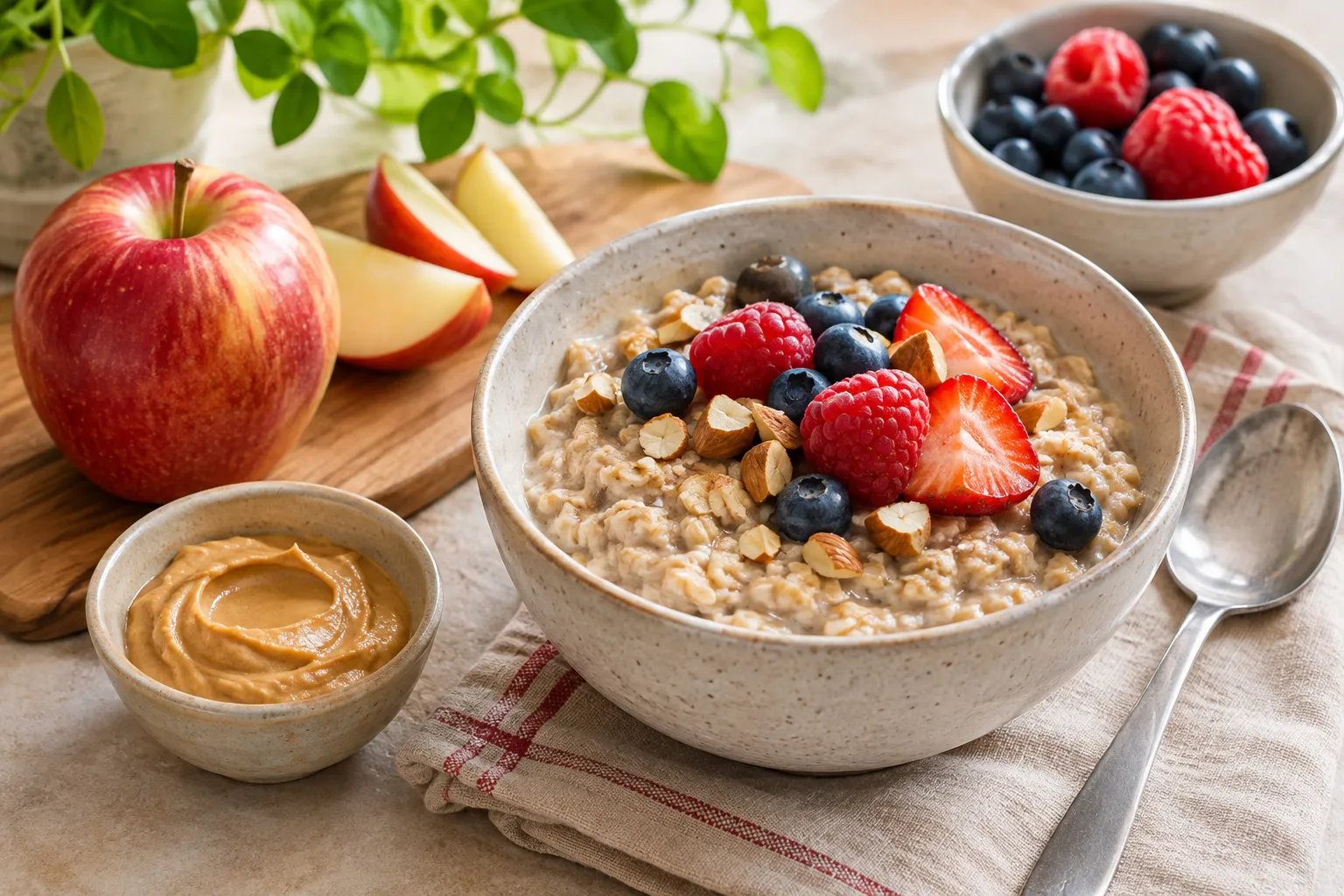
It’s Not Just What You Eat—It’s Also How Much
Another useful concept to understand is the glycemic load, or GL. While the glycemic index tells us how a carbohydrate-containing food affects blood sugar under standardized conditions, glycemic load also considers the amount of carbohydrate in the portion you actually eat.
For example, eating a small serving of rice may have less of an impact on your blood sugar than eating a large bowl of the same rice.
This means you don’t necessarily have to eliminate higher-GI foods. You can start by adjusting portion sizes, choosing lower-GI alternatives when possible, and balancing your meals with protein and vegetables.
A Week of Meals: Simple, Accessible, and GI-Conscious
Not sure where to begin? Here is a sample seven-day menu using familiar foods and easy-to-prepare ingredients.
| Day | Breakfast | Lunch | Dinner |
|---|---|---|---|
| Monday | Scrambled eggs, multigrain toast, orange wedges | Turkey and cheese sandwich with cucumber | Chicken, brown rice, steamed carrots |
| Tuesday | Old-fashioned oatmeal with banana and nut butter | Tuna, whole-grain crackers, tomatoes | Spaghetti with turkey meat sauce and green beans |
| Wednesday | Plain Greek yogurt with berries | Chicken and cheese wrap with vegetables | Salmon, sweet potato, zucchini |
| Thursday | Scrambled egg taco and fruit | Leftover spaghetti with turkey sauce | Turkey meatloaf, potato, green beans |
| Friday | Nut-butter toast and an apple | Chicken and brown rice bowl | Chicken fajitas with corn tortillas |
| Saturday | Small pancakes, scrambled eggs, berries | Meatloaf sandwich with tomato | Baked fish, sweet corn, green beans |
| Sunday | Egg and cheese English muffin with an orange | Grilled cheese and tomato soup | Chicken pot pie skillet |
These meals are flexible examples of GI-conscious eating, rather than a strictly low-GI diet. Not every ingredient is low GI, and the meals have not been clinically tested. Adjust portion sizes and ingredients to meet your individual nutrition needs.
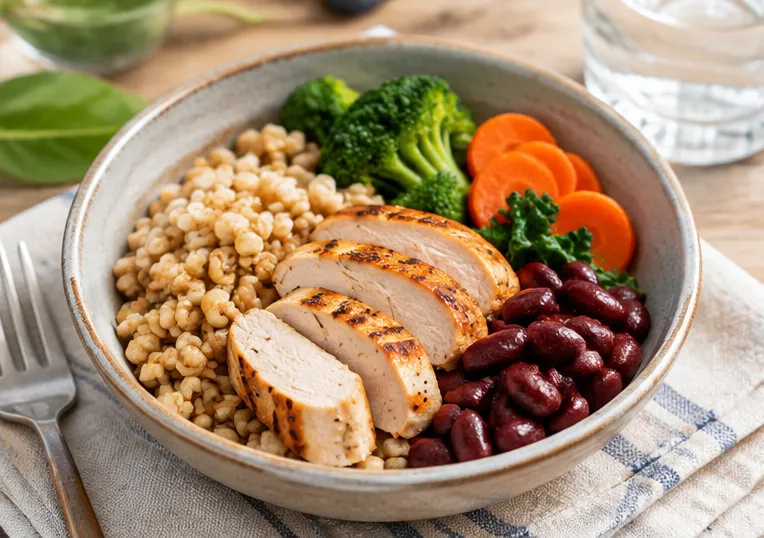
Five Easy Recipes to Get You Started
1. Chicken and Brown Rice Bowl
About 8 minutes with precooked ingredients
Combine ½ cup cooked brown rice, 3 ounces cooked chicken, and ½ cup steamed vegetables. Add a little of your favorite sauce or dressing.
Make it easier: Use microwaveable rice, precooked chicken, and steam-in-bag vegetables.
2. Spaghetti with Turkey Meat Sauce
About 15–20 minutes with prepared pasta
Enjoy ¾ cup cooked spaghetti with cooked ground turkey, tomato sauce, and a side of green beans.
Did you know? Regular spaghetti is often a low-GI food. You don’t necessarily need to give up pasta.
3. Salmon with Sweet Potato and Zucchini
About 20–30 minutes
Roast a salmon fillet and sliced zucchini with olive oil and your favorite seasonings. Serve with half a small sweet potato. Cook salmon to an internal temperature of 145°F.
4. Turkey and Cheese Melt
About 10 minutes
Layer sliced turkey, cheese, and tomato between two slices of multigrain bread. Heat in a toaster oven until the cheese melts and serve with steamed carrots.
5. Quick Chicken Pot Pie Skillet
About 20 minutes; serves two
Combine one cup cooked chicken, one cup frozen mixed vegetables, and half a cup lower-sodium cream-style soup or gravy in a skillet. Heat thoroughly and serve each portion with one small biscuit.
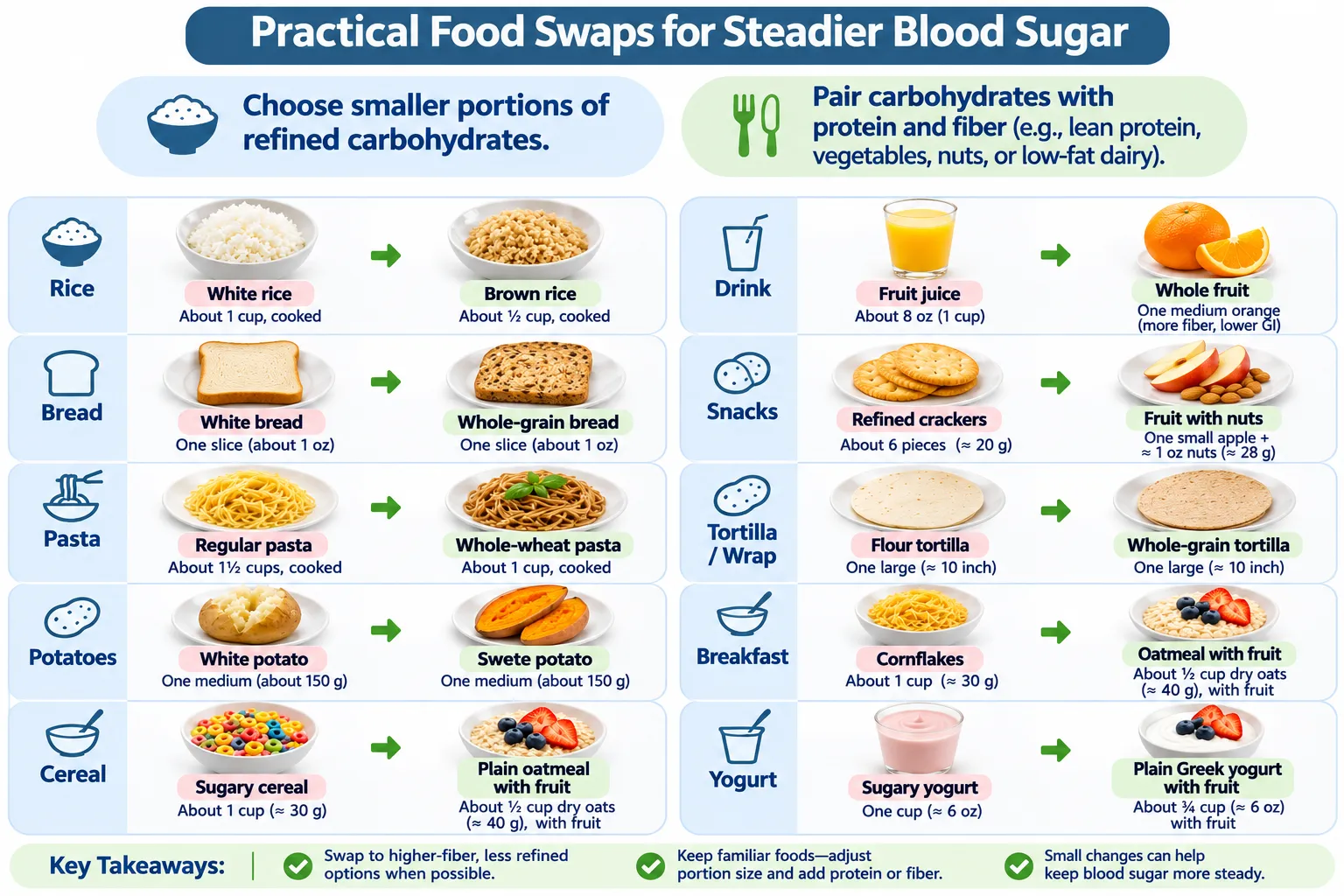
Small Swaps That Can Make a Difference
You don’t have to change your entire diet overnight. Start with a few simple changes.
| Instead of… | Try… |
|---|---|
| Sweetened instant oatmeal | Old-fashioned oatmeal with fruit |
| A large bowl of white rice | A smaller serving of rice or barley |
| Cornflakes | Old-fashioned rolled oats |
| A large glass of fruit juice | A small whole orange |
| Two cups of pasta | A smaller portion of pasta with protein and vegetables |
| A large baked potato | A smaller potato or a modest serving of beans |
| A large flour tortilla | One or two small corn tortillas |
| Pancakes with lots of syrup | Pancakes topped with warmed berries |
Remember, a small change that you can maintain is often more valuable than a major change that is difficult to sustain.
Which Common Foods Are Low GI?
Here are some examples of familiar foods and their average glycemic index values.
| Low GI (55 or less) | Medium GI (56–69) | High GI (70 or more) |
|---|---|---|
| Kidney beans (24) | Muesli (57) | White rice (73) |
| Chickpeas (28) | Pineapple (59) | Whole-wheat bread (74) |
| Lentils (32) | Boiled sweet potato (63) | White bread (75) |
| Apple (36) | Couscous (65) | Watermelon (76) |
| Orange (43) | Brown rice (68) | Boiled potato (78) |
| Corn tortilla (46) | Instant oatmeal (79) | |
| Spaghetti (49) | Cornflakes (81) | |
| Sweet corn (52) | Instant mashed potatoes (87) | |
| Rolled oatmeal (55) |
Source: Atkinson et al., International Tables of Glycemic Index and Glycemic Load Values (2008)2. Values may vary with variety, brand, ripeness, and preparation.
A low GI does not automatically make a food healthier, just as a high GI does not automatically make a food unhealthy. Portion size, fiber, added sugar, sodium, and overall nutritional value are also important.
Making Low-GI Eating Work for You After SCI
Nutrition is not one-size-fits-all, especially after spinal cord injury.
Consider your bowel health. Beans, lentils, and whole grains can be excellent lower-GI options, but increasing fiber too quickly may cause bloating or discomfort. Make gradual changes based on your individual bowel management needs.
Make meal preparation easier. Frozen vegetables, precooked proteins, microwaveable grains, and adaptive kitchen tools can help reduce the time and effort involved in cooking.
Pay attention to portions. Your energy and nutrition needs may change after SCI. Choose portions that meet your individual needs rather than following a restrictive diet.
Listen to your body. If you frequently experience dizziness, weakness, or other symptoms after eating, speak with your healthcare team about whether you may be experiencing postprandial hypotension.
The Takeaway: Better Health, One Meal at a Time
Our research continues to explore how everyday nutrition choices may support the health and well-being of people living with SCI.
While there is still much to learn about the relationship between low-GI eating and blood pressure regulation, our early findings suggest that the types of carbohydrates we eat could make a meaningful difference.
You don’t need to follow a perfect diet or completely change the way you eat. Start with a bowl of old-fashioned oatmeal, try adding lentils to your favorite soup, or experiment with a different grain at dinner.
Better health can begin with small, manageable changes—one meal at a time.
This article is intended for educational purposes only and is not a substitute for individualized medical or nutrition advice. Please consult your physician and a registered dietitian before making significant dietary changes, particularly if you have diabetes, blood pressure concerns, take blood-sugar-lowering medications, or have SCI-related bowel concerns.
Literature and Further Reading
- Farrow M, Li J, Chahande S, et al. The Effect of a Low-Glycemic Index Diet on Postprandial Hypotension in Individuals With Chronic Spinal Cord Injury: Results From a Pilot Study. Topics in Spinal Cord Injury Rehabilitation. 2025;31(1):30–41. https://doi.org/10.46292/sci24-00044
- Atkinson FS, Foster-Powell K, Brand-Miller JC. International Tables of Glycemic Index and Glycemic Load Values: 2008. Diabetes Care. 2008;31(12):2281–2283. https://doi.org/10.2337/dc08-1239
- Linus Pauling Institute, Oregon State University. Glycemic Index and Glycemic Load. https://lpi.oregonstate.edu/mic/food-beverages/glycemic-index-glycemic-load
- Management of Neurogenic Bowel Dysfunction in Adults After Spinal Cord Injury: Clinical Practice Guideline. https://pmc.ncbi.nlm.nih.gov/articles/PMC8152174/
- Identification and Management of Cardiometabolic Risk after Spinal Cord Injury: Clinical Practice Guideline. https://pmc.ncbi.nlm.nih.gov/articles/PMC6758611/