Not a Checkbox. Not an Oracle. A Co-Architect.
Why SCI Research is Better When Lived Experience Helps Shape the Work
August 17, 2026
Ryan M. Danley
Not Sure What I Was Supposed to Do
When I first started working with the Pro-SCI lab, I wasn’t entirely sure what I was supposed to do.
Honestly, I wasn’t even sure what to make of the name.
The program that helped bring people with spinal cord injuries into research labs was called Lab Rats, an initiative from Unite 2 Fight Paralysis (U2FP). Matthew Rodreick, U2FP’s executive director, has always seemed much more comfortable with the “Lab Rats” name than I was at first. Matthew came into the SCI world after his son Gabriel sustained a C5 spinal cord injury as a teenager, and he has spent years pushing for faster, smarter SCI research. The more I got to know Matthew and the program, the more the name started to make sense to me.
Was I a lab rat? A consultant? An advocate? Was I there to answer questions? Give opinions? Participate in experiments? I understood the basic idea of being a PLEX, or person with lived experience, consultant, but I didn’t really know what that was supposed to look like in practice.
I have a C7 spinal cord injury. I’ve lived with it for years. I use a wheelchair every day. Presumably, I had some perspective that could be useful to researchers studying spinal cord injury.
At first, I figured that meant they would ask me questions here and there. How would this work for you? What do you think about this? Would someone with SCI actually do this?
There is certainly some of that. But over time, I’ve realized that a good lived-experience partnership can be much more than answering questions. At its best, it gives the person with lived experience an opportunity to become a co-architect of the work.
That does not mean running the lab. It does not mean telling researchers what they should study or pretending that living with SCI makes me an expert in experimental design. It means bringing another kind of expertise into the process early enough that it can actually influence what gets built.
When Theory Meets Somebody’s Actual Life
One of the clearest examples for me came from a metabolism study.
The study involved placing electrodes on the backs of my thighs and calves after a meal. The basic idea, as I understood it, was to use electrical stimulation to mimic some of the muscle activity I would otherwise get from walking and see what that did to metabolism.
On paper, placing electrodes at home sounds fairly straightforward.
Then I took them home.
My C7 injury affects my hands differently. I have one hand that works considerably better than the other. Reaching the right areas, positioning the electrodes properly and making sure everything was set up correctly was difficult to do independently. It became considerably easier if someone else was there to help.
That is difficult to fully appreciate when you are designing a protocol in a lab.
It is also why lived experience matters.
I am not an expert in how to design a metabolism study. The researchers are. But I am the person who eventually has to reach behind my leg and put the electrode where the protocol says it needs to go.
Those two kinds of knowledge need each other.
And even my experience does not provide the final answer.
I have friends with C5 injuries, friends with thoracic injuries, manual wheelchair users, power wheelchair users and people who use different adaptive techniques and equipment. Even two people who both have a C7 injury can have very different function.
My difficulty using an electrode does not mean I can announce that the protocol will not work for “people with SCI.”
What I can say is, “This was difficult for me. Who else might have difficulty with it? Who else should we ask?”
That distinction has become important to how I think about lived experience.
Having a spinal cord injury gives me a valuable perspective. It does not give me a universal one.
Somewhere Between a Checkbox and an Oracle
I think there are two easy ways to get lived-experience involvement wrong.
The first is treating it as a checkbox.
A study is already designed. The important decisions have already been made. Then someone brings in a person with SCI near the end and says, essentially, “Here is what we are doing. Does this look okay?”
The person was technically included, but there was very little opportunity to meaningfully influence anything.
I have experienced a version of this outside of research many times through accessibility.
A hotel room may technically be accessible while the furniture makes it nearly impossible to maneuver a wheelchair through the room. A restaurant may be accessible through the front door but have almost nothing except high-top tables. An automatic door button may exist, but the actuator barely opens the door.
Once, I was taking an accessible shuttle to the Memorial Tournament here in Columbus. The shuttle had a wheelchair lift, so technically the transportation was accessible.
The problem was that the lift apparently had not been used in a long time. Nobody really knew how to operate it, and nobody seemed to know who to call for help either.
So everyone waited.
I became the center of attention, which is already an uncomfortable position to be in, while people tried to figure out a piece of accessibility equipment that existed but was not actually usable when somebody needed it. After about twenty minutes, the lift still had not solved the problem.
Accessibility existed on paper. The actual experience was something very different.
Lived-experience involvement can fall into the same trap. Meeting the requirement is not the same thing as designing something that works.
But there is another extreme that I think we have to avoid too.
A person with lived experience should not become an oracle.
I should not walk into a lab and have everyone assume, “Ryan has SCI, so Ryan knows what people with SCI want.”
I don’t. Nobody does.
The spinal cord injury community is not a monolith. SCI can enter a person’s life at almost any age, which means the community cuts across race, culture, socioeconomic background, geography, careers, family structures and access to resources. Then add neurological level, completeness of injury, hand function, secondary complications, equipment, transportation and a hundred other variables that shape daily life.
Two people can have the same injury level on paper and live remarkably different lives.
The goal is not to replace one form of authority with another, or to place different forms of expertise on a hierarchy at all.
The better place is somewhere in the middle: co-architecture.
Proximity Matters Too
Some of the most valuable parts of my relationship with Pro-SCI have had nothing to do with sitting in a meeting and formally giving my opinion.
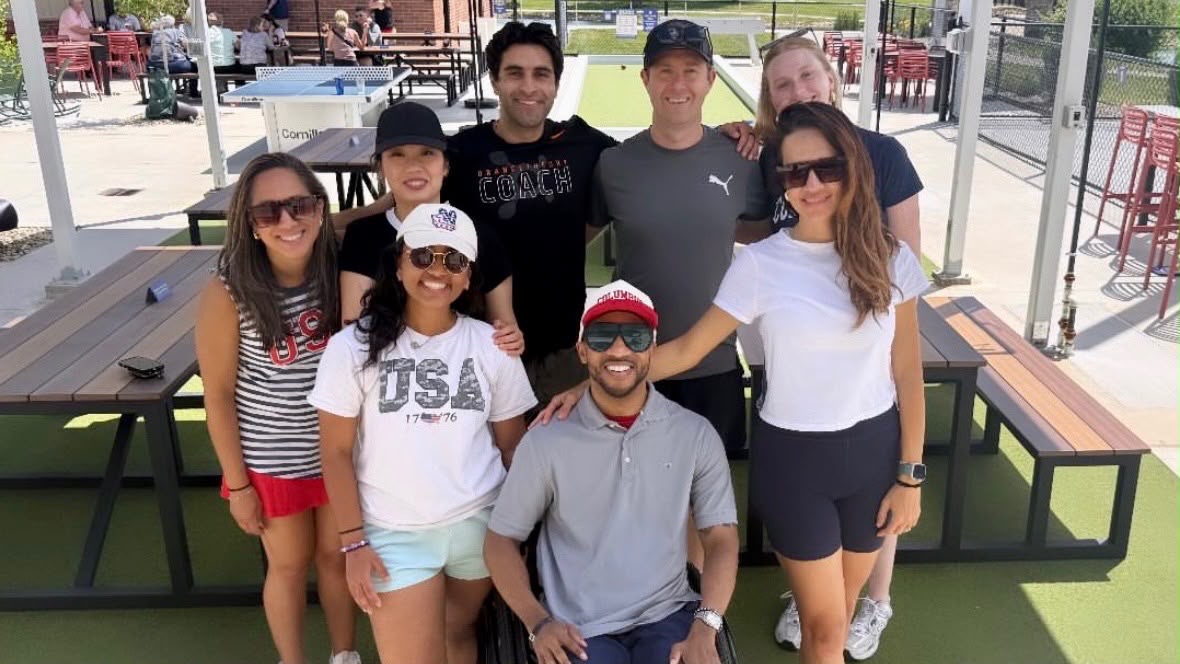
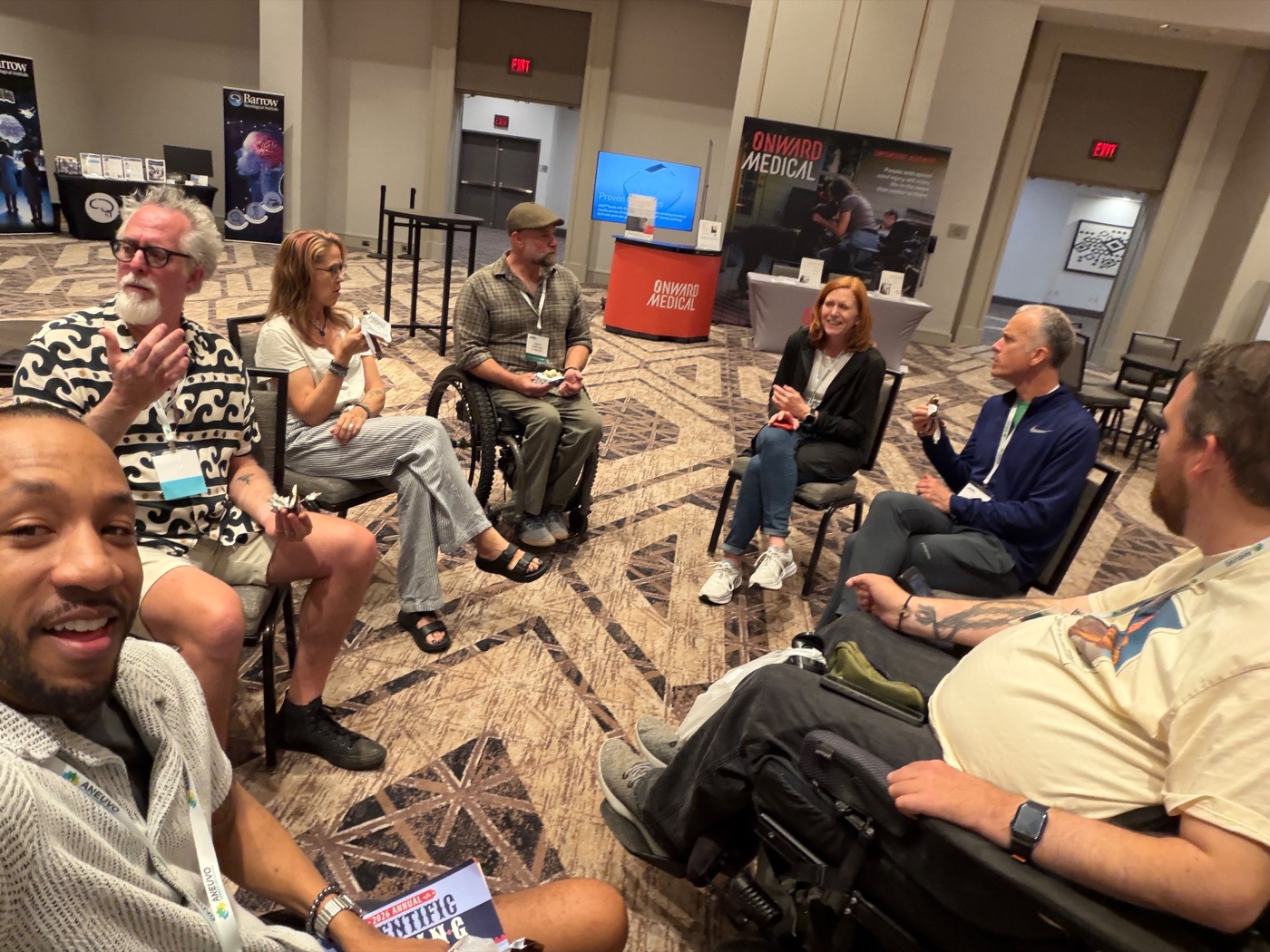
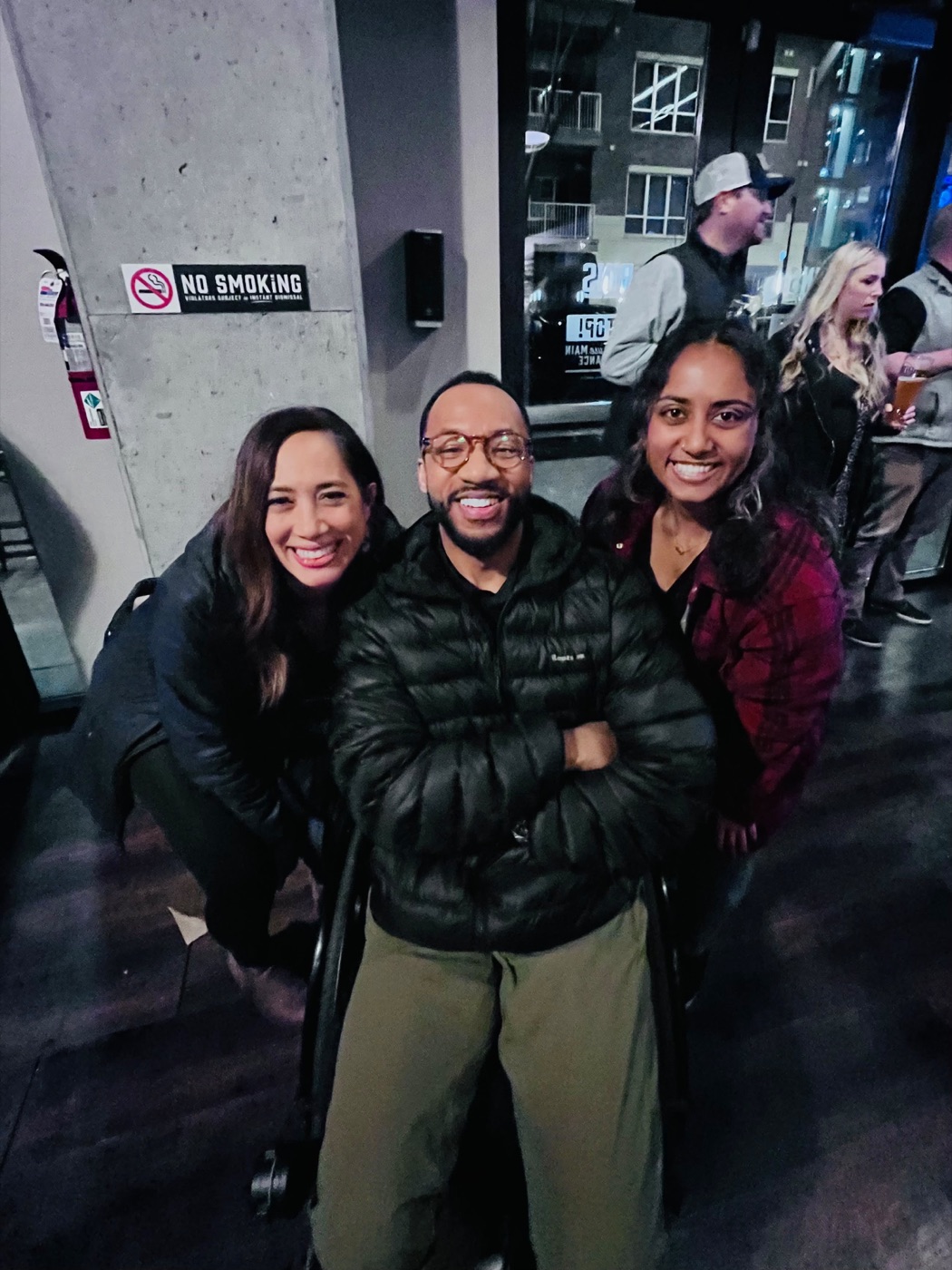
I participate in journal clubs. I review materials. I get invited to events, going-away gatherings and things happening outside the lab. We have group text threads. People check on me. Over time, many of these relationships have started to feel like friendships.
That matters more than I expected.
The more time researchers spend around me, the more they see things that I would probably never think to explain during a formal consultation.
They see me struggle with a heavy door. They see which environments I can navigate easily and which ones create problems.
At one birthday outing, someone was helping push my wheelchair while we were traveling a longer distance. We hit a curb, and because I do not have normal core function, I folded forward and ended up lying across my lap.
You can explain impaired core function to somebody. Seeing what it means in the middle of an ordinary night out is different.
There is so much about disability that goes unsaid because, after years of living with it, many of these things simply become normal to the person experiencing them.
That makes proximity its own kind of information.
The people around me start noticing things I might never think to put on a PowerPoint slide or bring up in a meeting. They see the curb cuts that work and the ones that don’t. They see how other people interact with wheelchair users. They see the difference between being technically able to participate and being able to participate without the entire experience revolving around your disability.
It is not me preaching about accessibility in a sterile environment. It is all of us experiencing the world together.
And that learning goes both ways.
What I’ve Learned About the Other Side
Before spending significant time around researchers, I was much more frustrated by the pace of SCI research.
Why is this taking so long? Why are people studying this instead of that? Why isn’t everyone throwing everything they have at solving spinal cord injury as quickly as possible?
I still believe there should be urgency.
But I also understand the environment better now.
Researchers work inside grant cycles, institutional approvals, regulatory requirements, budgets, publication pressures and a lot of paperwork. Research funding is finite and competitive. They are also people with jobs, careers and lives outside the lab. Sometimes an enormous amount of time goes into the machinery required to keep research happening rather than the research itself.
That does not mean we should accept every limitation of the system. It means we should understand where the problem actually is before deciding where to direct our frustration.
The same proximity that helps researchers understand my life has helped me understand theirs.
It has also changed how I think about research priorities.
If your daily life is dominated by bowel complications, bladder problems, pressure injuries, pain, metabolic health or another secondary complication, solving that problem may matter enormously to you right now. Someone else may be focused almost entirely on restoring movement.
Both perspectives are legitimate.
I still care deeply about the biggest question: restoring function after SCI. My personal finish line is easy to picture. I can go for a hike and hit my two-step. But working with the lab has given me a much better appreciation for why there is room to pursue many questions at the same time. The things that can look like side issues from the outside may be the things determining whether someone can live the life they want today.
A Bridge, Not the Final Answer
I increasingly see the PLEX role as a bridge.
I can bring questions and concerns from the SCI community into a research environment. I can help researchers think about how a protocol might actually feel to a participant. I can help with recruitment because I have relationships within the community. I can help translate scientific findings into language that makes sense outside of academia.
I can also travel in the other direction.
When people in the SCI community become frustrated with something happening in research, I now have enough exposure to sometimes provide context. I can explain why something may have taken longer than expected, why a study was designed a certain way, or why a researcher cannot simply change something that looks easy to change from the outside.
That does not mean defending every decision. It means understanding enough about both worlds to help them communicate better.
Scientists, in my experience, also have something of a marketing problem. Incredible work can happen inside a lab, but if the community does not know about it, understand it or trust the people doing it, recruitment becomes harder and valuable findings can remain trapped in scientific language.
A good lived-experience partnership can help close that distance.
The Part That Might Last the Longest
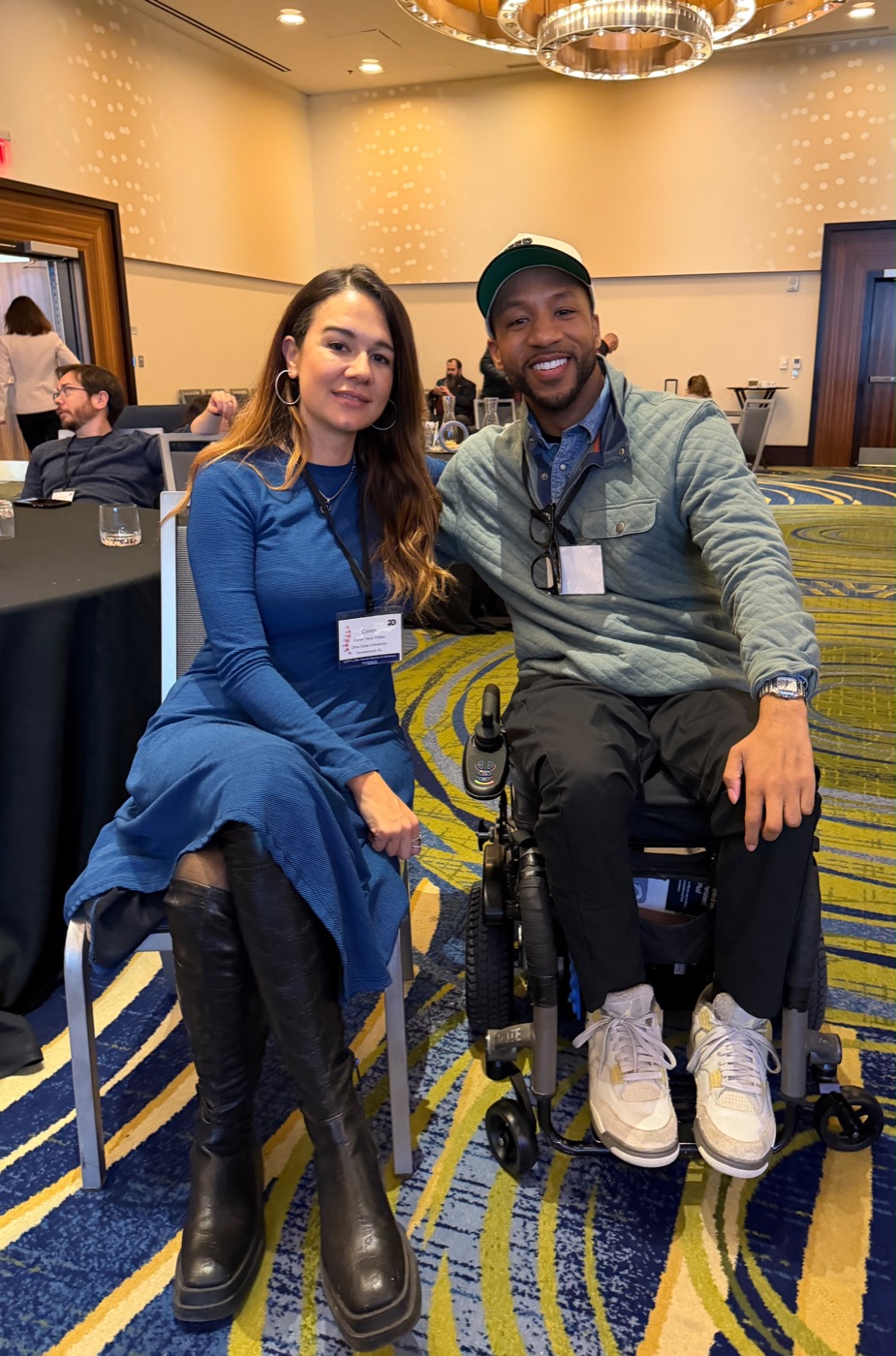
I also have to give a lot of credit to Dr. Ceren Yarar-Fisher — Ceren, as she lets me call her — for making room for this relationship to become what it has.
It would have been easy to invite me into the lab for an occasional meeting, ask for feedback and say we had incorporated lived experience.
Instead, she let me become part of the environment.
And over time, I have realized that the impact of that decision may extend well beyond any one experiment I ever comment on.
I’ve watched students grow through this lab. I’ve watched Reem take on research experience and continue moving toward medicine. I’ve watched Sana move from student life into medical school while staying connected to the lab. I’ve watched people at different stages of their careers develop not only as researchers, but as people.
They are watching me too.
They are not only learning about C7 spinal cord injury from a textbook, a dataset or a participant record. They know a person with one. They have watched me navigate doors, participate in experiments, get frustrated, joke around, disagree with them, go out with them and live my life.
I think that will have a lasting impact.
Years from now, these students will be physicians, scientists, clinicians, professors and leaders in places I probably cannot predict today. They will carry their own experiences from this lab with them.
Maybe the lasting value of lived-experience involvement is not only the protocol someone improves today.
Maybe it is also the researcher or physician who spends the next thirty years thinking a little differently because people with SCI were part of their world while they were learning how to become one.
That is difficult to measure. I also think it matters.
Designing With, Not Just For
I do not think meaningful lived-experience involvement requires giving people with SCI control over every research decision.
And I think that is important for researchers to understand too.
Inviting someone with lived experience into the process does not mean inviting someone into the room to tell you how to do your job.
A good PLEX relationship should help you do your job better.
Researchers should be passionate about the questions they are pursuing. That motivation matters when someone is going to spend years working through failed experiments, grant applications, revisions and all of the other challenges involved in science.
A person with lived experience does not need to choose the question.
But we can help frame it.
We can help researchers think through how an experiment will actually play out. We can identify barriers that may affect participation. We can help recruit people. We can interpret findings through another lens. We can help communicate those findings back to the people they are ultimately intended to serve.
And perhaps most importantly, we can help identify the next question.
That may be the biggest thing I have learned from being a PLEX consultant.
My job is not to walk into a room and provide “the SCI perspective.” There is no single SCI perspective.
My experience is one data point. It is an informed one, connected to years of living with an injury and relationships with a broader community, but it is still one experience.
The value is in what happens next.
Maybe something I experience causes a researcher to ask another person. Maybe that person gives a completely different answer. Maybe those two answers reveal a variable nobody had considered.
Then we ask another question, now informed by more data.
That is what good collaboration looks like to me.
Not checking a box. Not treating lived experience as unquestionable authority. Not deciding that one form of expertise matters more than another.
Co-architecture.
Building something together, learning enough about each other to see the problem more clearly, and continuing to ask more people better questions.
If you are a researcher or someone living with spinal cord injury who is interested in being part of that kind of relationship, Unite 2 Fight Paralysis has an SCI Consultant program designed to help make those connections.